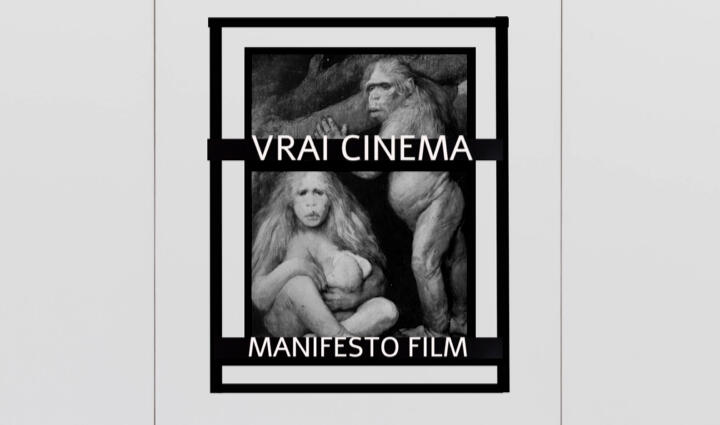
" CINEMA IS NOT RECORDED. IT HAPPENS." Karolis Jankus
Karolis Jankus is a transdisciplinary artist who treats the act of filmmaking as a radical form of performance art. His practice is defined by the deconstruction of traditional cinema, shifting the focus from the final industrial product to the raw, ephemeral process of creation.Jankus’s trajectory as a moving image artist was shaped by a resistance to conventional narrative, a journey that gained significant momentum in 1997 with his work in Paris, Ils vous baisent la main. This early exploration of social tension and the "atmosphere of hate" established his signature approach: using the camera not merely as a recording tool, but as a provocative witness and an extension of the artist's body. After founding the independent studio "Eurofilmai," he became known for a series of surreal and controversial works, including Dead Body Asks for Help and the feature film Jesus from Lithuania, which achieved cult status after being banned for its radical aesthetic and social defiance.Currently, Jankus is the driving force behind the VRAI CINEMA (True Cinema) movement. In this framework, the filmmaking process is reclaimed as a live, performative body-art form. He operates under the principle that the "set" is a space for uncontrolled, co-creative transformation, where the boundary between the creator, the performer, and the medium disappears. By moving cinema into the expanded field of contemporary art, Jankus presents his work as immersive video installations and durational performances, challenging the very definition of the moving image.
1 9 9 0 – 1 9 9 6 · E A R L Y P R A C T I C E & S T U D I E S.
THE BODY AS THE FIRST ARTISTIC INSTRUMENTKarolis Jankus began his artistic life not with a camera, but with a body — in public spaces and galleries across Vilnius, where action, presence and durational endurance became his primary materials. As early as 1990, he created performance works that questioned the boundary between the art event and its audience, staging situations in which the spectator's gaze itself became the subject.
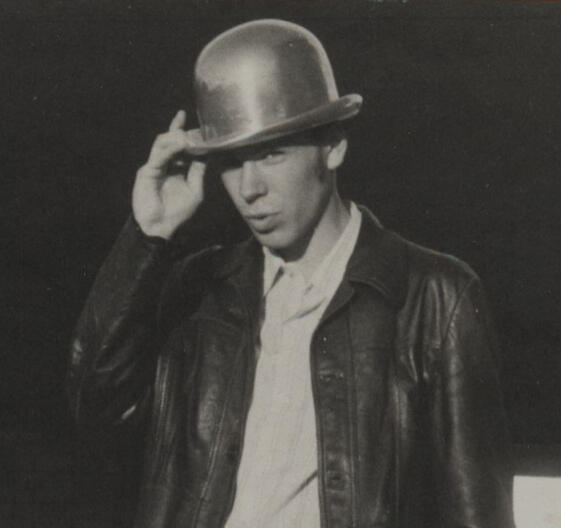
His most emblematic early work, The Menaced Assassin(1993, Gallery Langas), was inspired by René Magritte's painting of the same name. Dressed in a smoking costume and bowler hat, Jankus
repeated the same absurd text — a litany of prohibitions and instructions — for over ten hours, stopping only when the last spectator had left the room. The performance could not end as long as one observer remained: the viewer was not audience but co-creator, trapped within a conceptual mechanism that refused resolution. A second key work, Hamlet Forward and Back, presented at the Vilnius Contemporary Art Centre in 1998, asked whether sculpture could be literary text — the final scene of Shakespeare's Hamlet printed in both forward and reverse order, so that Hamlet first dies, then kills the king.
In 1992, Jankus enrolled at the Vilnius Academy of Arts to study sculpture — yet his practice already exceeded the discipline. He simultaneously wrote manifestos, absurdist plays and short
stories, treating text itself as a performative medium. These early years established the conceptual ground on which all subsequent work would stand: art as act, not object; the process as the work; the viewer as participant.The Menaced Assassin
Performance, 10+ hours · Gallery Langas, Vilnius · 1993
Hamlet Forward and Back
Installation-Manifesto · Vilnius Contemporary Art Centre · 1998
Water–Human–Sand / Sea–Human–Coast
Performance · Gallery Arka, Vilnius · 1992
F O U N D A T I O N A L P R I N C I P L E
Art is action and presence — not object. The spectator is not audience, but mechanism.
1 9 9 7 · T H E C A M E R A A S B O D Y
PERFORMANCE LOGIC ENTERS THE MOVING IMAGEAfter winning the French–Baltic–Nordic Video & Electronic Art Festival in Riga in 1997, Jankus received a scholarship from the French Ministry of Foreign Affairs and traveled to Paris — not as a tourist but as an investigator. There, in the Saint-Denis district, he began his first experimental film using a hidden-camera method borrowed from television, capturing the atmosphere of racial hatred and mutual suspicion that had taken hold following a series of violent incidents in the neighborhood.
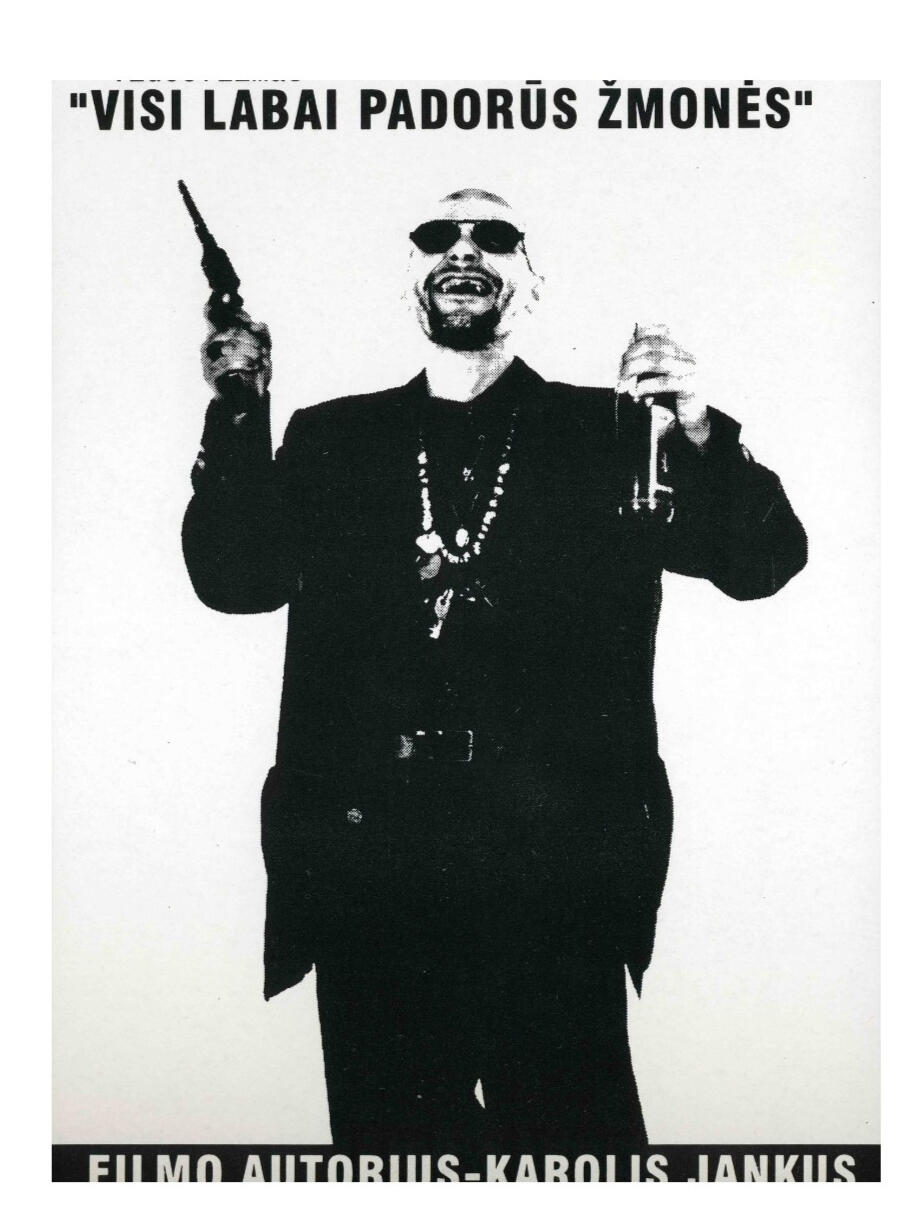
The resulting work, Ils Vous Baisent Les Mains (1997, 30 min.), is an experimental documentary in which Parisians suspect one another, newcomers are watched, and the police attempt to contain an invisible force. Shot by cinematographer Vydmantas Plepys, the film treats the camera not as a neutral recorder but as a physical presence — embedded in the social body, implicated in what it films. This approach — filming as performative act rather than documentation — would become the methodological spine of Jankus's entire practice. In the same year, he completed All Very Decent People (1997, 27 min.), an experimental film in which the boundaries between decency and obscenity, mafia and intelligentsia, norm and exception, dissolve entirely. Moving in slow motion for half an hour until someone falls in the corner and the figures depart the action area, the film won the Main Award at the French and Baltic States Video Art Festival — marking Jankus's international debut.All Very Decent People
Experimental film · 27 min · 1997 · Main Award, French–Baltic Video Art Festival
Ils Vous Baisent Les Mains
Experimental documentary · 30 min · Paris · 1997 · Special Prize, Riga'97
2. The Emergence of Experimental Cinema (1997)During his studies, Jankus began producing his first experimental films, extending the logic of performance into the realm of the moving image.At this stage, the camera ceases to function as a mere instrument of documentation and instead operates as an extension of the body, a concept later articulated within the Vrai Cinema manifesto movement.
EMERGING METHOD
The camera is not a recording instrument — it is an extension of the body, implicated in everything it touches.
The Emergence of Experimental Cinema (1997)During his studies, Jankus began producing his first experimental films, extending the logic of performance into the realm of the moving image.Key works:All Very Decent People (27 min.) – awarded the Grand Prize at the France and Baltic Video Art Festival
Ils vous baisent les mains – an experimental documentary examining the atmosphere of hostility in the streets of ParisAt this stage, the camera ceases to function as a mere instrument of documentation and instead operates as an extension of the body, a concept later articulated within the Vrai Cinema manifesto movement.
Quam elementum pulvinar etiam non quam lacus suspendisse faucibus interdum. Pretium quam vulputate dignissim suspendisse in est ante.
2002 – 2005 · Eurofilmai Period
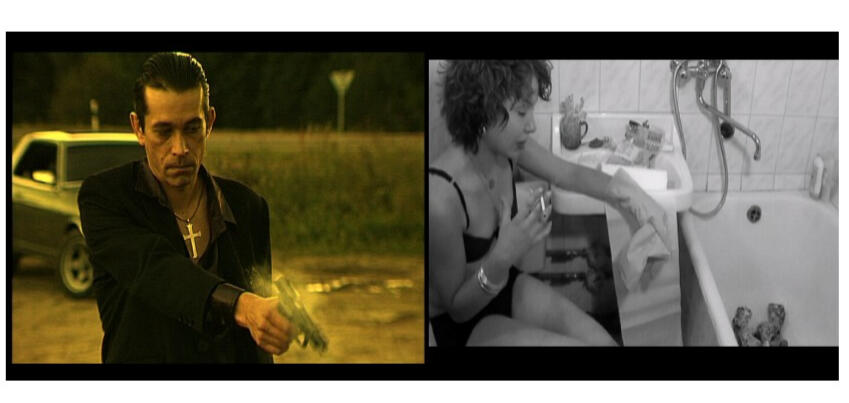
SEVEN FILMS FROM THE PERIPHERY OF POWERIn 2002, Jankus founded the independent film studio Eurofilmai, financing his work through commercial advertising — the state offered no support for his brand of critical, grotesque cinema. Over the following three years, he produced seven short films that circulated through international festivals and contemporary art exhibitions across Europe, establishing a distinctive aesthetic: brutal, surrealist, darkly comic, rooted in the post-communist social landscape of Lithuania.The films explored moral collapse, criminality, poverty and desire through the bodies of gangsters, teenage runaways, marginal figures and ordinary citizens whose lives were shaped by the wreckage of the Soviet transition. Boundaries between victim and perpetrator dissolved; the grotesque served not as stylistic excess but as epistemological truth about post-communist reality. As critic Raminta Jurėnaitė wrote of Jankus's Berlin exhibition at the Academy of Arts (2004): "The reality in Jankus' films is grotesque and surreal... events and actions take dramatic and simultaneously macabre turns."The standout work, Dead Body Asks for Help (2003), was the first East European film to screen at the Bristol International Short Film Festival (10th Brief Encounters), and earned Jankus a nomination for Best Young European Film Director at the 11th Granada International Festival. The film's premise — a gangster stops on a highway to shoot a dead body that asks for help — inhabits the absurd with the precision of philosophy. The short films were shown at SITGES 36th Barcelona, the 16th Girona Film Festival, Stuttgarter Filmwinter, Rauma Biennale Balticum, and the landmark "E.U. Positive" show at the Berlin Academy of Arts, as well as the touring exhibition "The New Ten" (MKM Duisburg, Künstlerhaus Vienna, Kunsthalle Mannheim, Museum voor Moderne Kunst Ostend).Dead Body Asks for Help
Short film · 3 min · 2003 · First East European film, Bristol Short Film Festival · Nominated Best Young European Director, Granada
Foxy Sisters, No Money No Sex, Zevango
Short films · 2003–2005 · Shown at SITGES, Girona, Stuttgarter Filmwinter, Lausanne Underground
"The New Ten" & "E.U. Positive"
Group exhibitions · Berlin Academy of Arts, MKM Duisburg, Künstlerhaus Vienna, Kunsthalle Mannheim · 2004–2005
Nunc sed velit dignissim sodales ut. Sed viverra ipsum nunc aliquet. Facilisis leo vel fringilla est ullamcorper eget nulla.
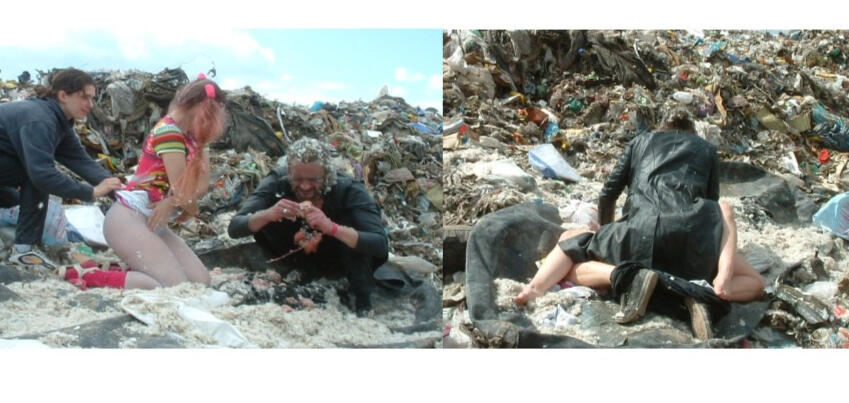
2006 · The Feature & the Censorship
JESUS FROM LITHUANIA —
CINEMA AS IDEOLOGICAL CONFRONTATIONJesus from Lithuania (2006, 60 min.) is Jankus's first full-length feature film and the first Lithuanian work made in the spirit of the Dogma95 movement — a cinema of imposed constraints used here not as aesthetic exercise but as radical theological provocation. In the film, Jesus descends once more to earth, this time to Lithuania: he drinks heavily, takes drugs, has sex with many women, and frightens everyone around him. God dispatches Judas Iscariot to end the matter quickly. The crucifixion scene was shot at the Kariotiškės landfill.Critic Skirmantas Valiulis described the film as drawing a montage-like parallel between the sinful, viscous life of the present day and canonical religious imagery — The Last Supper, the first apostles — making parallels "startling or outrageous because of their unexpectedness, but they help to keep the distance between the naturalism of life and the lost paradise of faith." The film was screened at Coca-Cola Plaza cinema in Vilnius. Shortly after its premiere, it was withdrawn from repertoire by authorities who cited the offence of religious feelings — becoming part of underground film culture for years.This censorship was not incidental to Jankus's practice but formative: it forced a reckoning with cinema as an ideological field, as an instrument of social control, as a space in which the institutional apparatus decides what is permissible. The experience sharpened his position as an artist working in fundamental resistance to those structures — a stance that would eventually crystallise into the Vrai Cinema manifesto.Critical Rupture
The censorship of Jesus from Lithuania was not a setback — it was the proof: cinema is an ideological field, not a neutral art form.
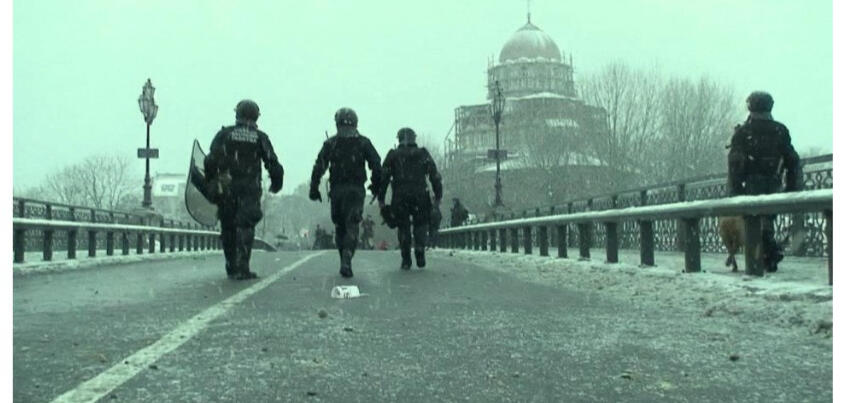
2009 – 2013 · The Revolutionary Period
CINEMA AS SOCIAL PROCESS
The catalyst was January 2009: mass riots outside the Lithuanian Parliament building in Vilnius, which Jankus happened to be filming by chance. The footage became the seed of a four-year social-cultural research project — simultaneously an artistic practice, a public intervention, and a documentary method. He founded a Facebook page and began publishing a new short film every week, each one a sharp critical commentary on Lithuanian society: its political contradictions, its post-Soviet identity crises, its silences and its violences.The project accumulated 50 short films over four years. Each film was an episode in an unfolding collective portrait — micro-revolutions and micro-protest gospels, in Jankus's own phrase. The page attracted significant public attention across multiple layers of Lithuanian society. Then, due to the sharpness of its political critique, the page was blocked and effectively banned from the platform — a second act of institutional censorship that paradoxically confirmed the project's power.The 50 films were later assembled into the six-hour epic documentary The Silent Lithuanian Revolution (2013), screened across 20 Lithuanian cities — Vilnius, Klaipėda, Šiauliai, Panevėžys, Telšiai, Ukmergė, Šilutė and others — in cinemas, galleries and cultural centers. In this work, the characters themselves become creators shaping the course of events; the revolution takes place not somewhere far away but "here in Lithuania and now." Reviewed in Kultūros Barai (Nr.6/2012) as a cultural revolt epic, the film represented a decisive step toward Jankus's later thesis: the filmmaking process as collective performative act.The Silent Lithuanian Revolution
Epic documentary · 6 hours · Lithuanian Independent Cinema · 2013 · Screened in 20 Lithuanian cities · Reviewed in Kultūros Barai Nr.6/2012PARADIGM SHIFT
The viewer becomes participant. The character becomes creator. The film happens in real time — as life does.
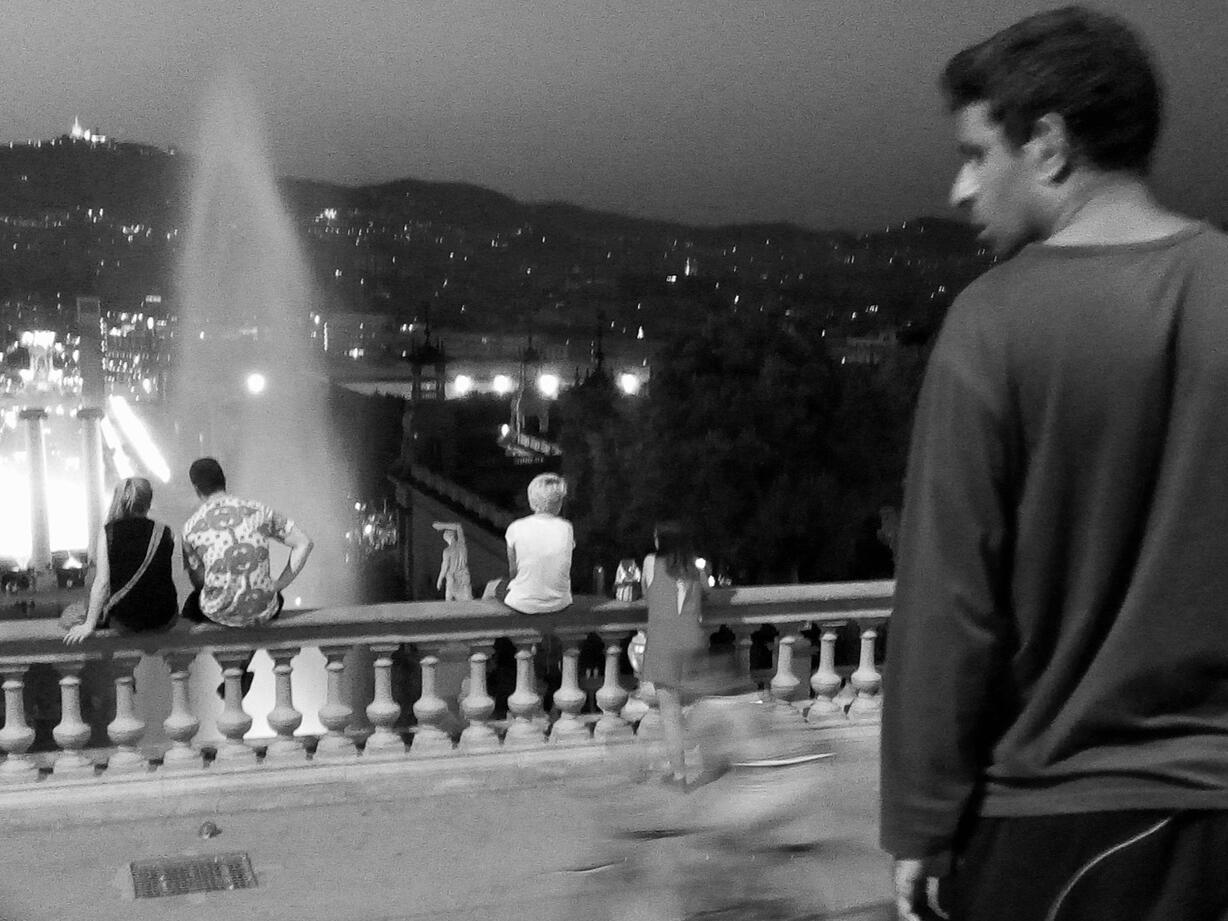
2020 – 2022 · Barcelona Period
Quarantine, Loneliness,
and the Post-Apocalyptic Body
On the first day of the COVID-19 lockdown, Jankus took a video camera into the deserted streets of Vilnius. Each day of quarantine became its own short film — a fixed-camera portrait of fossilised citizens, asked to freeze before the lens for a few minutes, their stillness transforming them into something between census document and elegy for a disappearing humanity. Over 40 days, 40 short films were made, titled simply First Day of Quarantine, Second Day of Quarantine, and so on — a durational, sequential diary of the pandemic as experienced on the body of the city.When restrictions eased and permits were obtained, filming extended to Barcelona, where Jankus continued the same method: documenting the parallel quarantine experience of the Catalan capital, its empty streets and anxious social body. The 40 Vilnius films and the Barcelona footage were then assembled into the feature documentary Biological Loneliness (2021, 66 min., Kunstkamera), which premiered at the Valencia Indie Film Festival.The film won awards at the Tokyo Film Awards (Best Feature Documentary), the Twilight Tokyo Film Festival (Best Experimental Film), Indie Doc Pro Barcelona (Best Feature Experimental), the Calcutta International Cult Film Festival, the Madrid International Short Film Festival, the Varese International Film Festival, and the Cult Critic Movie Awards in Kolkata. On Letterboxd, critic Antonio Ribera gave the film five stars, comparing it to Jean Vigo and Luis Buñuel: the director abandons any attempt to show a real pandemic, instead presenting the simple life still continuing even as the world has stopped.METHOD CLARIFIED
40 days, 40 films. A single camera. Citizens frozen before the lens. The process was the archive — and the archive became the film.
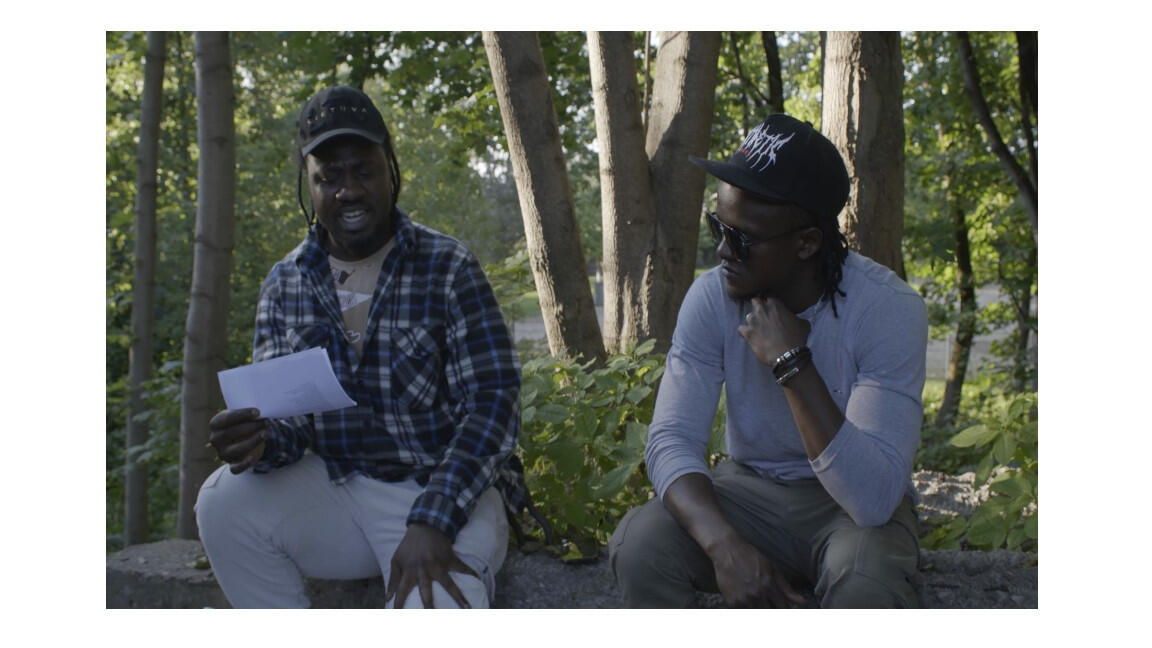
2023 – 2024 · Academic Research
The Filmmaker as Artist-ResearcherWith a BA in Sculpture (1998) and MA in Media Art (2014) from the Vilnius Academy of Arts, Jankus approaches his current practice not only as a filmmaker but as a methodological researcher working within the tradition of practice-as-research. His ongoing independent research project is framed under the working title: "The Filmmaking Process as a Form of Performative Art. The Case of Vrai Cinema."
The central thesis is that the filmmaking process is not merely the means to a product — it is itself the artistic work. In this framework, the camera is an extension of the body; the act of filming is a performative act equivalent to performance art; and the manifesto — as with Fluxus, as with Dogma95 — functions simultaneously as theoretical statement and artistic event. Jankus situates his practice in dialogue with Marina Abramović's conception of the body's presence as the artwork, Carolee Schneemann's use of the camera as corporeal extension, Vito Acconci's provocation-as-method, and the cinema of Jonas Mekas, John Cassavetes, and Jean-Luc Godard — all of whom used the act of filming as a form of thinking-aloud.
The research also aims to establish new curatorial and academic criteria: tools that would allow a work of cinema-performance to be distinguished from an industry product. Jankus operates as artist-researcher within the Lithuanian Interdisciplinary Artists' Association (LeTMeKoo). The research is inherently transdisciplinary — spanning performance art theory, moving image studies, documentary practice, and philosophy of cinema.
Screenplay: Feelings
2024 · Bergman–Fellini Award, Best Arthouse Screenplay (8 & HalFilm Awards, Dubai) · Grand Prix, Frida Film Festival, Lyon (Best Feature Script)RESEARCH THESIS
Filmmaking is not a means to a product — filmmaking is itself the artwork. The process is the performance. The manifesto is the methodology.
2025 - 2026 – Present · Vrai Cinema
Vrai Cinema —
Cinema Liberated
Vrai Cinema — True Cinema — is Jankus's response to three decades of working inside and against the structures of the film industry. It is not a style or a genre: it is a system, a manifesto, and a method of production that refuses the logic of the controlled, scripted, hierarchically produced film. The manifesto consists of four rules, stated with deliberate simplicity.1
Making a film is a living process.
2
The number of characters in the film is constantly changing.
3
A film script consists of a basic idea and an action plan.
4
The film's action and characters change as circumstances change.
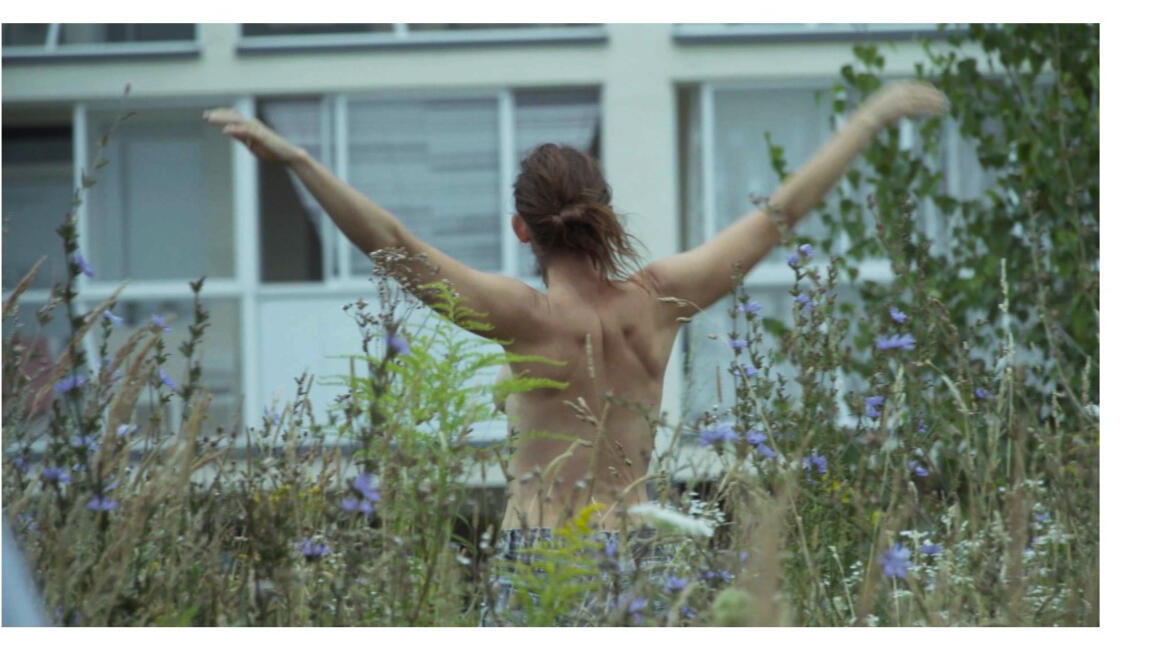
Within this system, the fixed screenplay is abandoned. Hierarchies between director, actor, and cinematographer dissolve: all become co-creators. The camera reacts rather than plans. The errors are not failures but form. The filming process does not illustrate a story — it generates one, in real time, in response to the living situation. Jankus describes the goal as making a film "cleaned of the rules invented from the film industry" — one that has "nothing artificial and fictional, that is alive and constantly changing."The first work produced under the Vrai Cinema manifesto is Chagrin (Vrai Cinema Film No.1, 2025, 114 min., Kunstkamera), loosely inspired by Balzac's La Peau de chagrin. A group of young people decide to liberate cinema from industry rules and begin making their own film in the here and now. Characters put on clay masks and go out into the street to create a new reality. During the filming, actors and cinematographers became real creators rather than performers. The process did not collapse into anarchy — it generated a drama-comedy with a strange, complicated plot that sometimes leaves the frame of traditional cinema entirely and becomes a contemporary work of art.FINAL EQUATIONVrai Cinema = the transformation of cinema into a performative, living, constantly changing system of art. Process = work. Manifesto = methodology. Cinema = action.
Vrai Cinema Film No.1 La Ventre de Paris

LE VENTRE DE PARIS d'après Émile Zola
Avec Clémentine Grosjean, Shilot Sonkere, Emy Lee, Loena Iskyender
Vrai Cinema Film No.2 La Shute
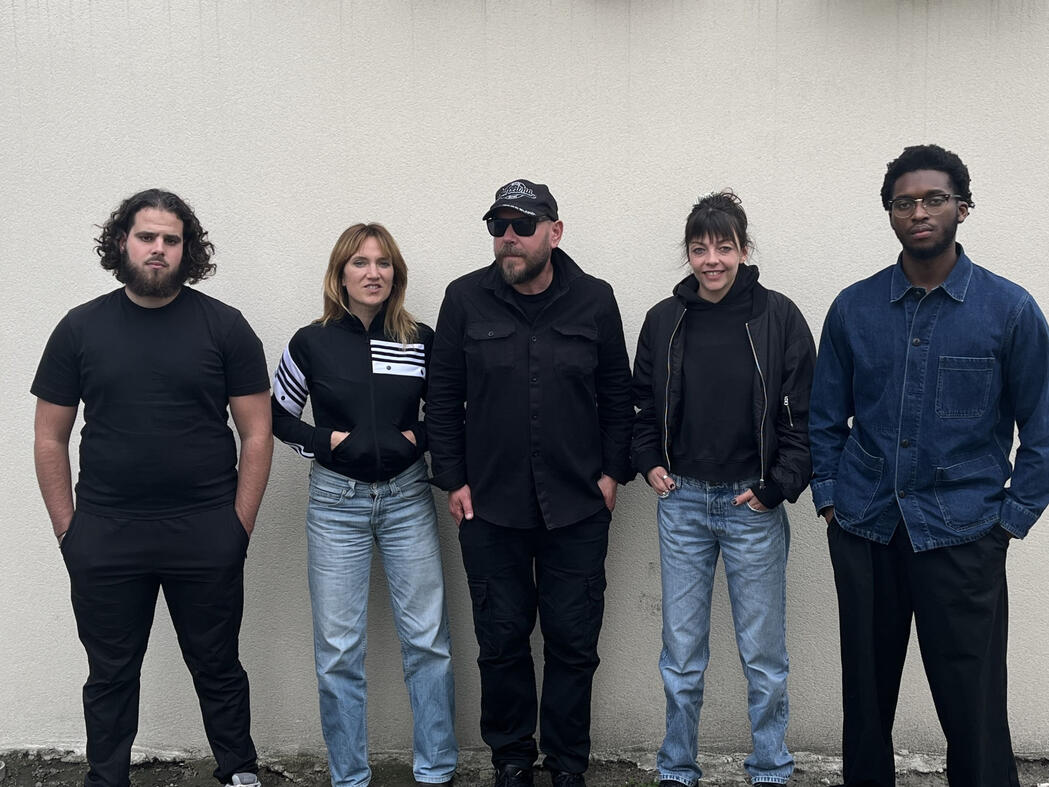
LA CHUTE d'après Albert Camus
Avec Mamady Ali Coulibaly, Dylan Blls, Morgane-Amanda Gacon, Clémentine Grosjean